
Billion Citizens is a roguelike deck-building game with city-builder mechanics. You play a French megalomaniac mayor who wants to build a megalopolis housing 1 billion inhabitants. Steam page
Origin story
I was walking through the alleys of the Paris Est Ludique board game event when I wondered what a Carcassonne rogue-like would look like.
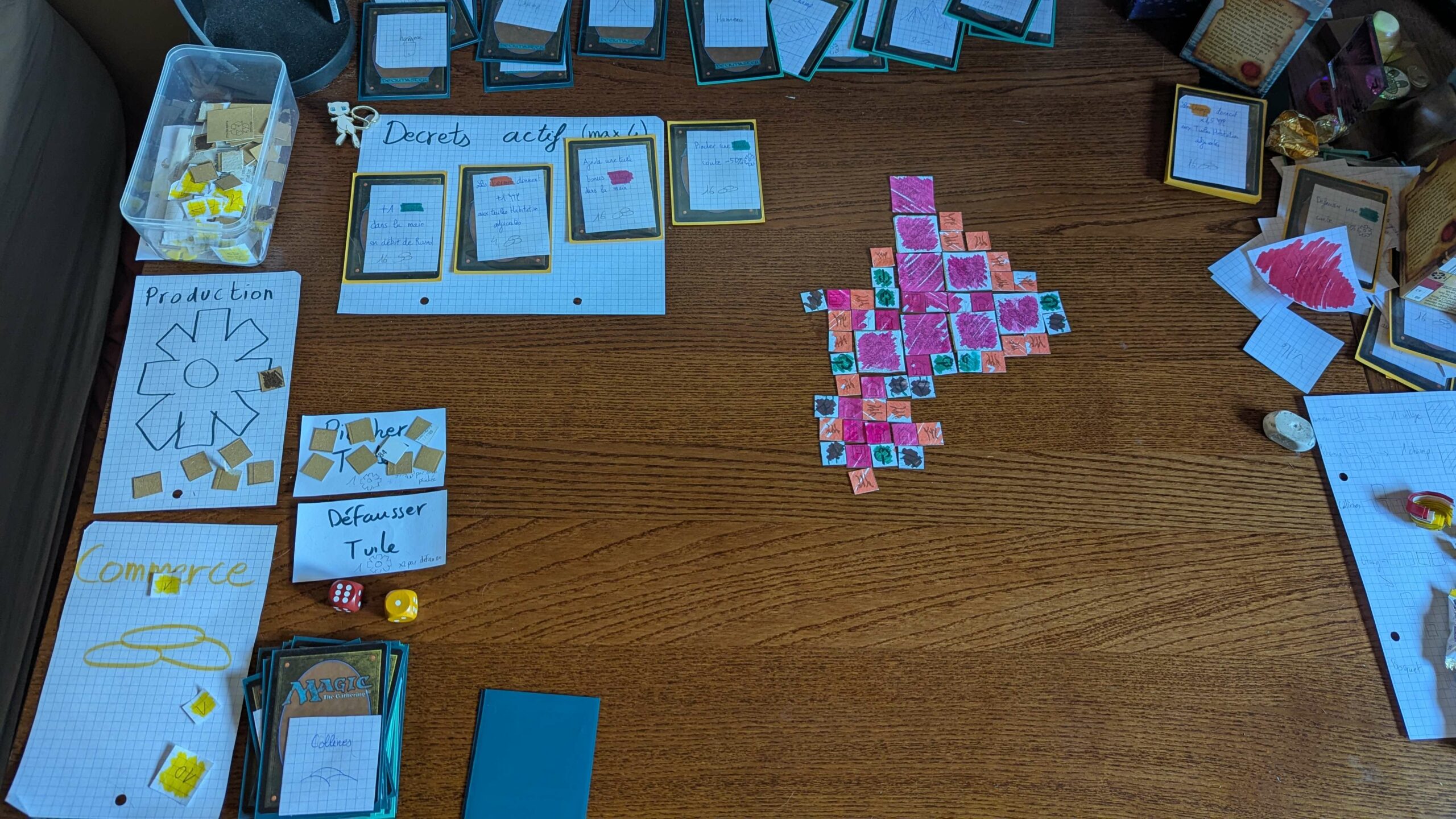
The next weekend, I made a cardboard and paper prototype where you fuse tiles into larger ones. We went for a Balatro-style scoring: homes multiplied by food. It is very simple, but it allows for depth.
A physical prototype lets you iterate extremely fast. You can even change the rules in the middle of a playthrough if something doesn’t fit or simply isn’t fun. I also made it to validate the idea without spending time programming it. A few friends tried it and seemed to have fun, even with all the friction that comes from the physical medium.
This was just one year before the Claude Code era, which makes prototyping on a computer super fast. Cardboard prototypes don’t suit every genre. You need a turn-based setting, because anything real-time would be far too hard to simulate by hand.
The goals of this project
The main goal is to make a successful commercial game on Steam. I consider it a success if everyone on the team earns the French hourly minimum wage, based on the time they spent working on the game.
I know how important the choice of genre is. I didn’t want to make a 2D platformer or a puzzle game, because I would need an exceptionally good game to stand out from the crowd.
Blindly picking the best-selling genres isn’t the answer either. I want to enjoy playing the game, and I want to understand the genre deeply so I can make the right design decisions:
City-builders are a popular genre: check.
Balatro was my game of the year 2024, both as a player and as a game designer.
I absolutely love rogue-likes for their permanently fresh gameplay and the higher stakes of perma-death.
On paper, a city-builder rogue-like deck-builder looked good to go. The deck-building genre is quite saturated with Slay the Spire clones, but the city-builder side gives it a fresh spin. There are also plenty of Balatro-likes coming out, but they mostly take a physical or board game and mix it with Balatro’s scoring system. Again, there weren’t many city-builder Balatro-likes when this project began.
The origin of the deck-building
During the prototyping phase, we tried several rule sets for placing tiles:
- Classic city-builder rules. You have unrestricted access to every building type, and each building has a cost.
- A deck of cards. You draw a fixed number of cards, and the round ends when you have played them all.
- A deck of cards that each have a cost. The round ends when all the resources for building structures are spent. This is the popular deck-builder way.
In the end, we didn’t just copy the popular deck-building mechanic. We tried the alternatives first. For a rogue-like that needs a high degree of randomness to be fun, the third option was the right choice. Going through this process also taught us why this system is so compelling and so widely used.
The name
The name “Billion Citizens” arrived very fast, in the first few weeks of the project. The win condition of reaching 1 billion inhabitants is attractive and instantly understandable for a potential player. I am not a marketing expert, but I think it sounds like a good name for a game.
The Itch prototype
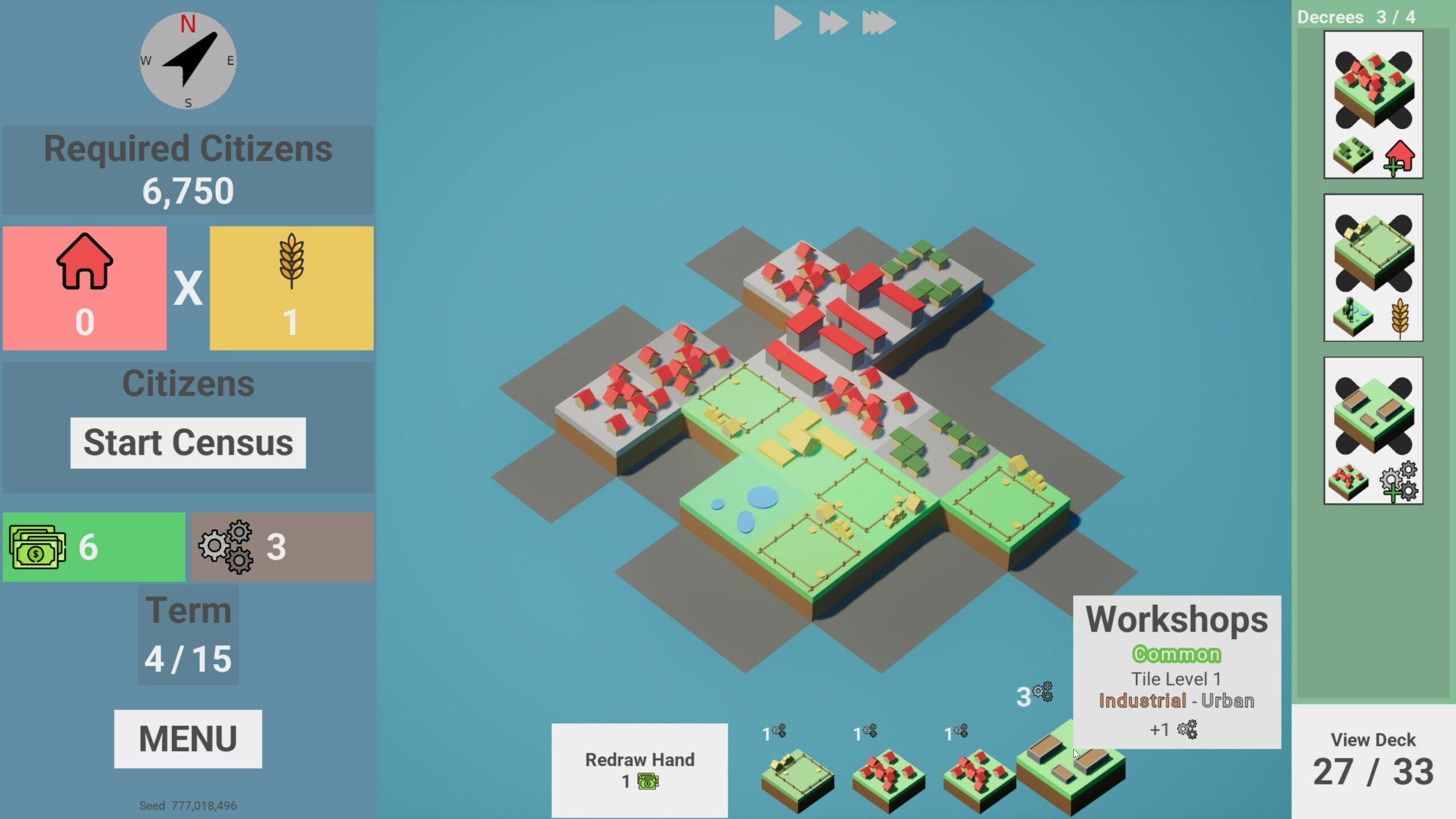
I started programming the game on 2025/07/17, with the goal of publishing a prototype on Itch two months later, in September. It was a second validation attempt for the project.
The game is an Unreal Engine 5 project, so there is no web export, which is very unfortunate for Itch. We went for a packaged zip instead, which attracts orders of magnitude fewer players than a build playable directly on the game’s page.
In the end there were many players, but what really validated continuing the project was a decently sized publisher who made a lot of effort to find a way to contact me through LinkedIn, which I very rarely open. We were surprised that an ugly prototype made in 2 weeks could attract publishers. We didn’t end up doing any partnership, but we are grateful for the signs they gave us to keep going.
Hunkering down and working
We kept working on the project for many months. During that time I was also working on ZeroSpace 4 days a week, which left me the remaining spare time for Billion Citizens.
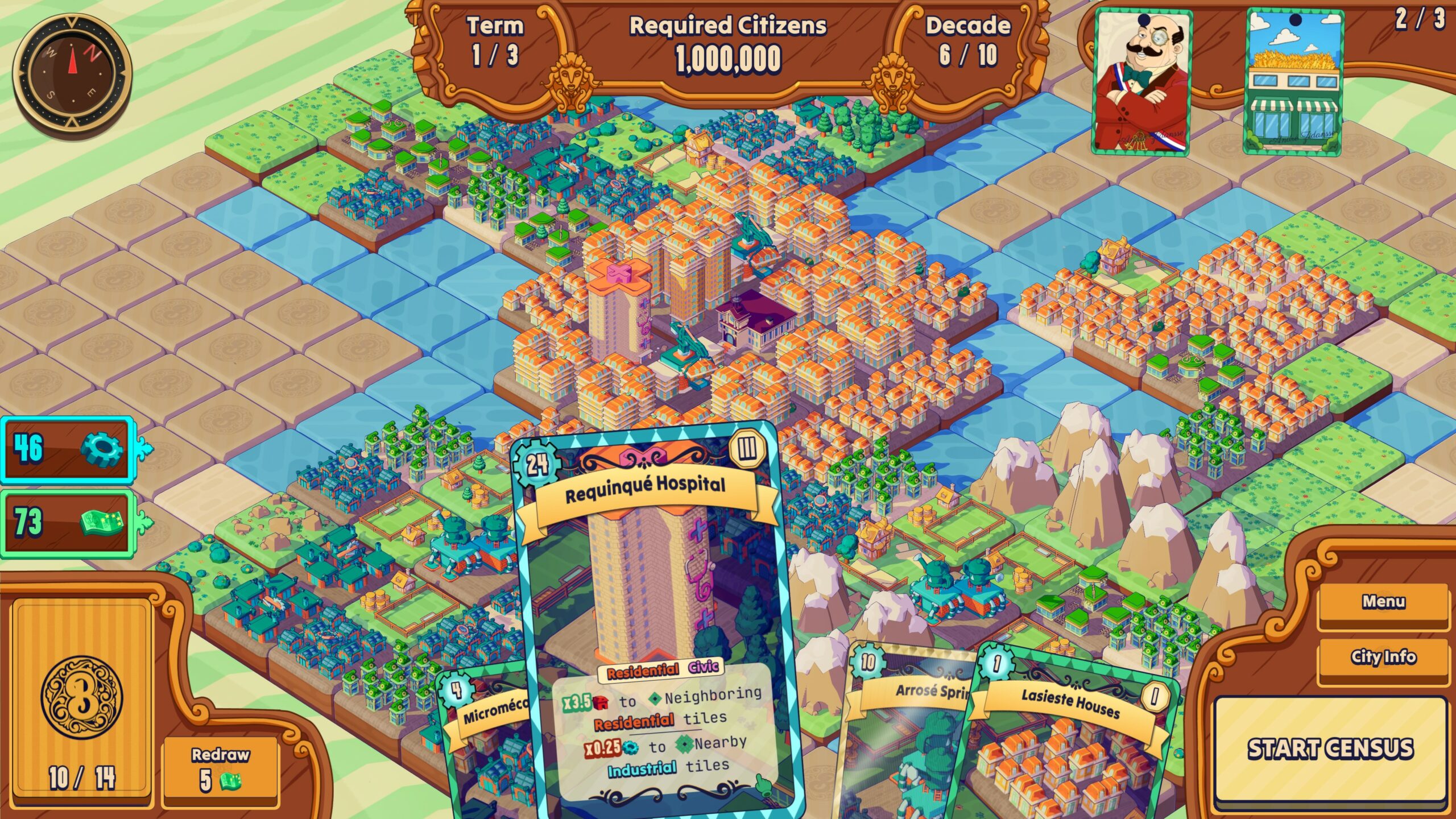
In May we opened our Steam page. We were taking part in the Indie Game Lyon event, and the game was in a good enough state to be shown. At that point most of the systems were done. Since then, we have mostly added new content and done many balance passes.
In October, we opened a public playtest that acts like a pre-demo.
This article will be updated as the game is built.
